
The fight or flight trap: why your body can’t tell the difference between a bear and a bad day
Here's something worth knowing about the human nervous system: it was built for a world that no longer exists. Specifically, it was built for short, intense bursts of physical danger — a predator, a threat, something you either ran from or fought off — followed by a period of calm where the body recovered and reset.
The problem is that your nervous system never got the memo about modern life. It doesn't know that the email from your boss isn't a bear. It can't distinguish between a looming deadline and a physical threat. From a neurological standpoint, stress is stress — and your body responds the same way every single time.
Heart rate up. Digestion slowed. Muscles braced. Cortisol released. The whole survival package — triggered by a traffic jam.
What's actually happening when you're "stressed out"
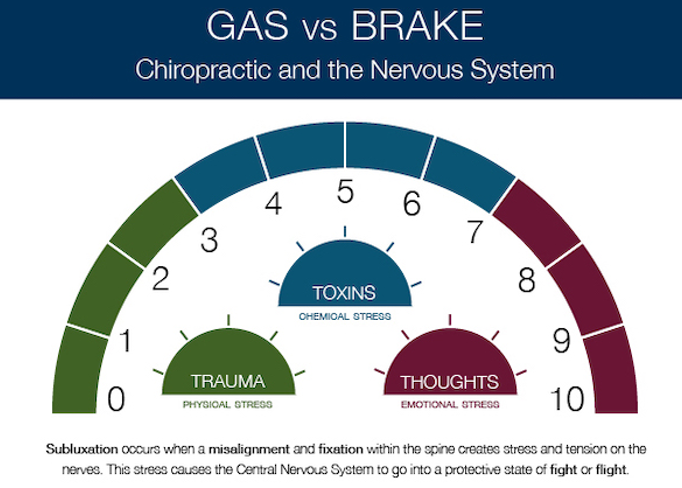
Your autonomic nervous system runs on two branches that are meant to balance each other. The sympathetic branch is the gas pedal — it mobilizes your body for action, floods it with adrenaline, and sharpens your focus on the immediate threat. The parasympathetic branch is the brake — it's where digestion, repair, immune function, and deep sleep happen. It's your body's recovery mode.
In a healthy nervous system, these two branches work like a well-timed dance. Stress happens, the gas pedal engages, the threat passes, the brake takes over, and the body recovers. That's the design.
But modern life throws stressors at us faster than the recovery can happen. Work pressure, financial worry, poor sleep, relationship tension, overscheduled calendars — these don't arrive as single events with a clear end point. They layer. They pile. They run in the background, 24 hours a day. And over time, the gas pedal gets stuck down.
This is what we call sympathetic overdrive — and it's not just "being stressed." It's a physiological state your body starts defaulting to, even when there's nothing actively wrong.
What sympathetic overdrive actually feels like
Because it develops gradually, most people don't realize they're in it. They just think this is what life feels like now. Some of the most common signs:
Tired but wired — exhausted but can't actually rest
Brain fog, difficulty concentrating, or decision fatigue
Digestive issues — bloating, constipation, IBS symptoms
Feeling irritable, anxious, or emotionally reactive
Getting sick often or taking forever to recover
Chronic tension in the neck, shoulders, or jaw
Sound familiar? A lot of people manage these symptoms with coffee, ibuprofen, or willpower — and assume it's just what being an adult feels like. But these aren't signs of aging or laziness. They're signs of a nervous system that's stuck and hasn't been able to find its way back to balance.
Here's the part most people don't know: chronic stress physically rewires your nervous system
When the sympathetic system runs hot for long enough, the nervous system actually starts to reorganize around it. The pathways that activate the stress response get stronger and faster. The pathways that lead to calm and recovery get weaker from underuse. The body literally becomes more efficient at generating a stress response — and less capable of turning it off.
This is why meditation apps and deep breathing — while genuinely helpful — often don't feel like enough. They're working from the top down, asking a brain that's been in overdrive to consciously choose calm. That's hard when the wiring underneath has reorganized around stress being the default state.
Why chiropractic care is one of the few things that can actually reset this
Your spinal cord is the main communication highway between your brain and your body. Every signal that travels through your autonomic nervous system — including the signals that keep the stress response running — passes through the spine. When vertebrae are misaligned or not moving properly, they create interference in that communication, and the sympathetic system can get locked into overdrive as a result.
Chiropractic adjustments work directly on that interference. By restoring proper movement and alignment to the spine, they help the nervous system shift out of the stuck sympathetic state and back into the balance it was designed to maintain. It's not masking the stress response — it's removing the physical barrier that's been keeping it from shutting off.
This is also why patients often notice things they didn't expect after starting care — better sleep, improved digestion, calmer moods, more energy. Those aren't coincidences. They're what happens when the parasympathetic "rest and recover" system finally gets some room to work.
How we measure where your nervous system actually stands
One of the things that makes our approach different is that we don't guess. Using INSiGHT CLA neurospinal scanning, we can get an objective, measurable picture of how your autonomic nervous system is functioning right now — including whether you're stuck in sympathetic overdrive, and where along the spine the interference is coming from.
That scan is part of every new practice member evaluation. It's what allows us to build a care plan that's actually designed around your nervous system — not a generic protocol, but a real picture of what's happening and what needs to change.
If you've been running on stress for longer than you can remember, it might be time to find out what your nervous system is actually doing — and give it a real path back to balance.
