
The missing link behind ADHD, Autism, SPD, and other neurodevelopmental disorders
What if the root cause is something that most doctors don’t think to look for?
Chronic illness in kids has reached numbers that would have been unthinkable a generation ago. Sensory issues, anxiety, sleep problems, digestive complaints, meltdowns — these aren't rare anymore. And no single cause explains all of it.
That's because it usually isn't one cause. It's a series of stressors that build on each other during the most critical windows of a child's development. In the world of nervous-system-focused care, we call this The Perfect Storm.
The Three Stages of the Storm
1) Before birth: prenatal stress
A baby's nervous system starts developing in the womb — and it's shaped by the environment it develops in. When a mother experiences chronic stress during pregnancy, stress hormones cross the placenta and influence how the baby's own nervous system forms, particularly the vagus nerve and autonomic nervous system. Fertility struggles, prenatal complications, and high-stress pregnancies all play a role here, often before a single symptom ever shows up.
2) During birth: physical trauma
Birth is physically demanding — even in the smoothest deliveries. Interventions like forceps, vacuum extraction, and C-sections can put real stress on a newborn's head, neck, and upper spine, the exact area where the brainstem connects to the rest of the nervous system. This stage hits a nervous system that may already be more vulnerable because of what happened in stage one.
3) Early childhood: accumulating stressors
From there, ordinary early childhood experiences start to stack on top: frequent antibiotic use, environmental toxins, infections, and everyday physical and emotional stress. For a nervous system with strong reserve capacity, these are usually manageable. But for a nervous system that's already been through stages one and two, there's less buffer to absorb them.
Each stage builds on the one before it. By the time a child reaches school age, what started as a few small disruptions can show up as a nervous system that's overworked, dysregulated, and stuck — often shifted into sympathetic "fight or flight" dominance, without the energy or capacity to find its way back to calm.
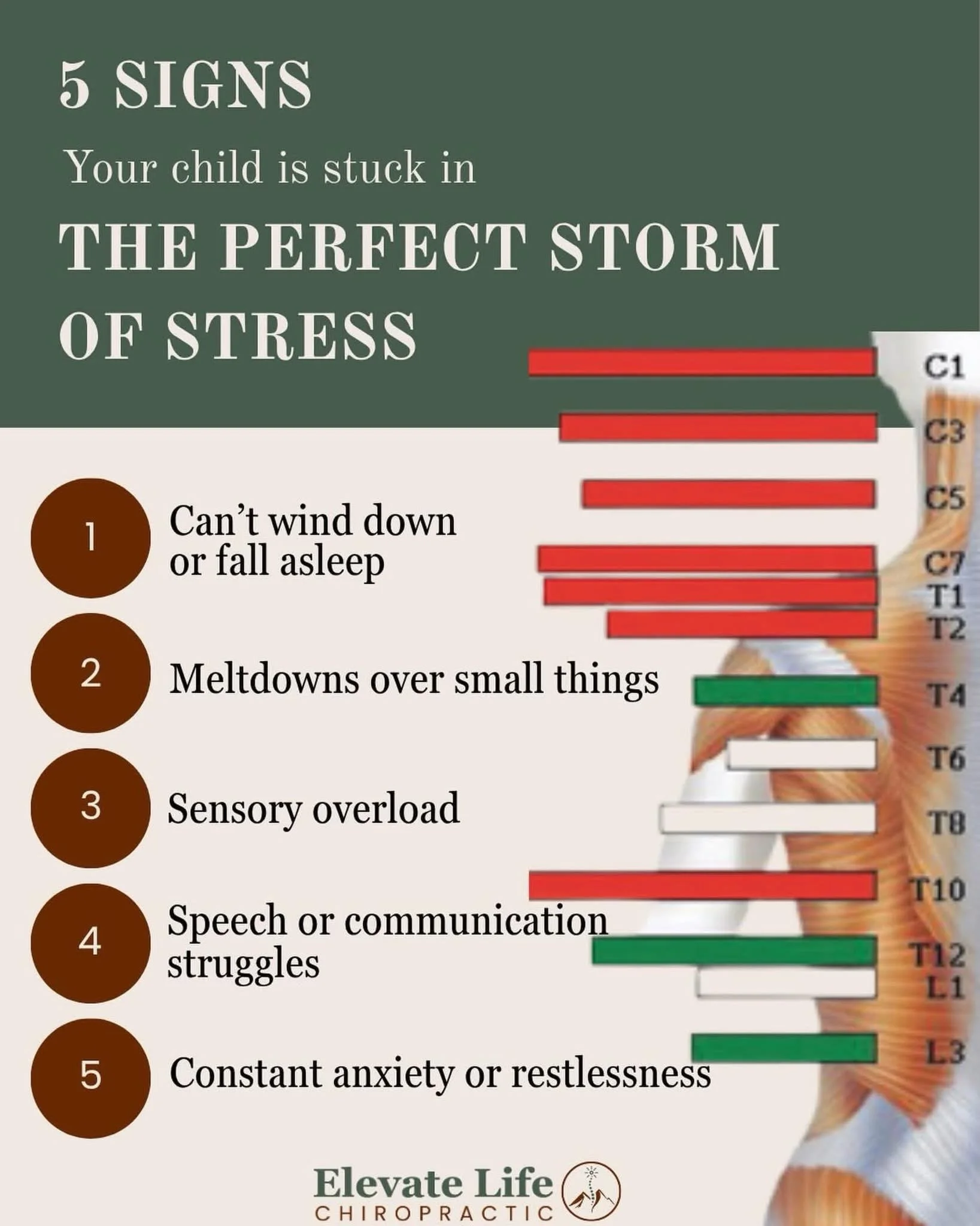
Why this explains so many “unrelated” symptoms
Sensory sensitivities. Anxiety. Trouble sleeping. Digestive issues. Meltdowns that seem to come out of nowhere. Frequent illness. On paper, these look like separate problems requiring separate specialists. But they often share the same root: a nervous system that's lost its ability to regulate between stress and calm.
That's the real insight behind the Perfect Storm framework. It's not about blaming any one factor, it's about recognizing that several smaller stressors, layered together during critical developmental windows, can overwhelm a nervous system that would have handled any one of them just fine on its own.
There is still hope and healing for your child
If you are reading this and realizing maybe you did have a stressful pregnancy, a birth that didn’t go your way, or there is a correlation between the Perfect Storm and your child’s health struggles, you are not alone. And there is hope for your child to heal. I would encourage you to schedule a consultation and scans so that we can talk through his health history, things you as the parent have noticed, and get INSiGHT scans so we can get to the root of the issue, together!
