
The test most doctors have never heard of — and why it might be the most important one you ever take.
You've probably had blood work done. Maybe an X-ray, an MRI, or a stress test. These are good tools — but they all have one thing in common: they look at structure and chemistry. They're great at finding what's broken. They're not so great at telling you how well your body is actually functioning.
That's where most people get stuck. They feel off. They're tired, achy, not sleeping well, stressed, or just not running at full capacity — but every test comes back "normal." So they're left with no answers and a shrug.
There's a better question to be asking — and a scan that actually answers it.
The question isn’t “what’s wrong?” It’s “how well is my nervous system actually working?”
Meet the INSiGHT CLA scan
The INSiGHT CLA is a neurospinal scan — a non-invasive, completely painless technology originally developed to measure the effects of space travel on astronauts' spines. Today, it gives us an objective, real-time window into something that no blood panel or X-ray can show: how your nervous system is functioning.
It actually runs three separate scans in one sitting:
1. Thermal scan
Measures temperature variations along your spine to detect nerve irritation and inflammation. Your nervous system controls blood flow — so uneven temperature patterns reveal exactly where stress is accumulating.
2. Surface EMG (sEMG)
Measures the electrical activity in the muscles along your spine — showing how much energy your body is burning just to hold itself together. High readings mean your system is working overtime. Low readings mean areas have essentially gone quiet.
3. Heart rate variability (HRV)
Measures how well your autonomic nervous system can shift between "go" mode and "recover" mode. It's one of the best indicators of your body's overall resilience — and one of the first things to suffer when you're chronically stressed or run down.
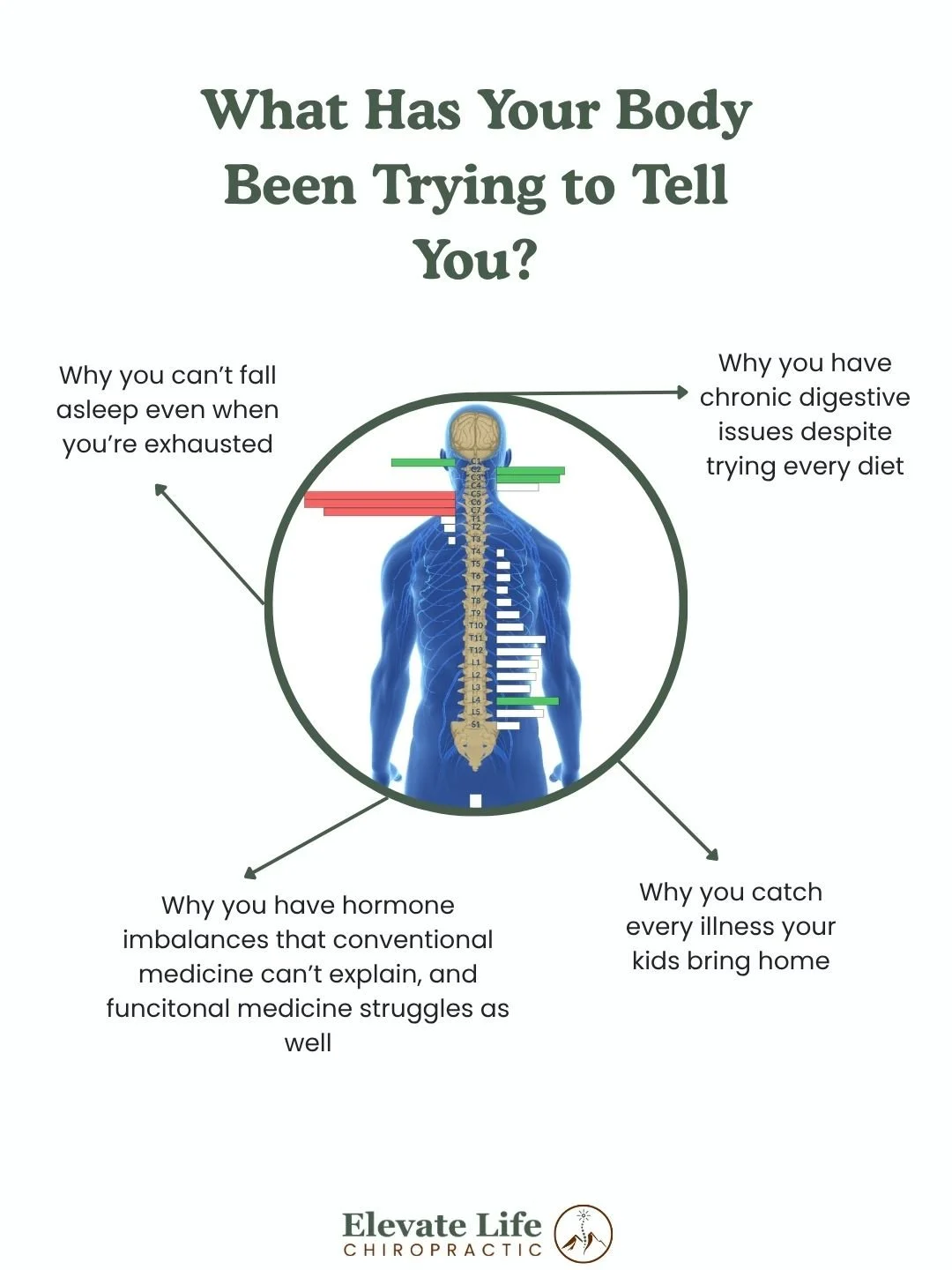
What makes this different from everything else
Most health tests are reactive — they're looking for disease after something has already gone wrong. The INSiGHT scan is different. It measures function, which means it can show nervous system stress and interference before it turns into a bigger problem.
That means it works for a 6-week-old baby and a 60-year-old adult. It works for the person managing chronic symptoms and the person who just wants to make sure everything is running the way it should. It's completely safe, non-invasive, and takes just a few minutes.
And most importantly — it gives you a clear, visual, objective picture of what's actually going on inside your nervous system. Not a guess. Not "it might be stress." A real answer.
